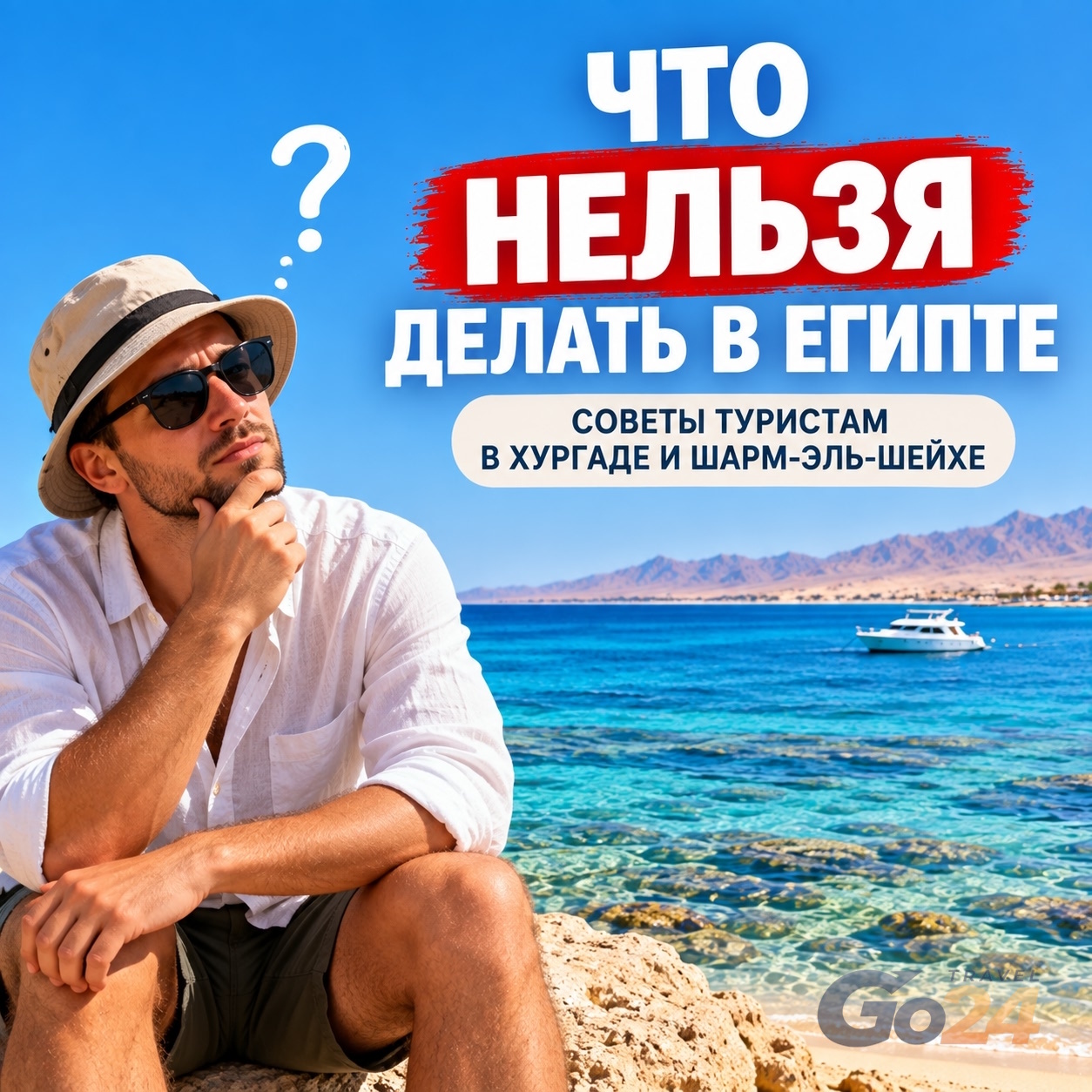
What not to do in Egypt as a tourist? Planning a holiday in Egypt, Hurghada or Sharm El Sheikh? Besides the beaches, excursions and the Red Sea, it helps to know a few simple rules in advance so you don't ruin your trip with an unpleasant situation. Below we go through the main restrictions and recommendations that will be useful at the resort.
We have put together a short list of what tourists in Egypt are better off not doing — from tap water to photos of sensitive sites.
What not to do in Egypt as a tourist: tap water
For drinking and making drinks, it is better to use bottled water — it is sold in every shop and is inexpensive. It is not advisable to fill up with tap water for the road or to brush your teeth with it if you can use bottled water instead.
Protect corals and marine life
The Red Sea is famous for its coral reefs, but many corals and sea animals are fragile or can be dangerous. Do not step on corals, break them off, or pick up marine creatures for a photo.
Even a beautiful piece of coral or a shell from the seabed is better left in place: taking some natural finds out of Egypt can cause problems at airport security.
Don't photograph everything
In Egypt, you should not photograph military sites, security personnel, police posts, airports and similar infrastructure. If you are not sure whether you can photograph a particular place, it is easier to ask your guide or locals in advance.
Exchange money only in reliable places
It is safer to exchange currency in banks, hotels or official exchange offices. Offers from random people on the street to exchange money "much more favorably" often end in losing money rather than gaining.
Agree on the taxi price in advance
If the trip is not booked through an app and does not run on the meter, it is better to agree the price before getting into the car. This is especially relevant in the tourist areas of Hurghada and Sharm El Sheikh, where the price is sometimes named only during the ride. For a trip from the airport, you can book in advance a transfer in Hurghada with a known price.
Don't agree to the first price quoted
At markets and in small tourist shops, bargaining is a normal part of buying. If the price seems too high, you can calmly ask for a discount or compare the price in the shop next door.
Don't underestimate the Egyptian sun
You can get sunburned even in winter and in windy weather, especially on a yacht, on islands, while snorkeling and on safari. Sunscreen, a hat and enough water are not a formality but a necessity.
Respect local dress traditions
On the hotel grounds and at the beach, a swimsuit is fine. But outside the hotel, in the old parts of the city and especially near mosques, more covered everyday clothing is more appropriate.
Egypt is a Muslim country, and in tourist areas guests are treated quite freely, but respect for local traditions always counts in your favor.
Don't get into aggressive arguments
If something does not suit you in a shop, a taxi or on an excursion, it is wiser to discuss the situation calmly rather than raise your voice. A loud conflict almost never solves the problem faster than a calm conversation.
Carry cash with you
Do not rely on a bank card alone — cards issued by Russian banks, in particular, do not work in Egypt. Cash will come in handy for taxis, markets, tips, small cafes and some excursions.
Don't rely only on hotel Wi-Fi
Hotel internet sometimes works unreliably or only reaches certain areas of the hotel. If you need a constant connection, it is more convenient to buy a local SIM card with mobile data in advance.
What to arrange in advance
Two things that will spare you extra hassle with money and mobile connection on vacation.
Travel insurance
It is better to arrange a medical policy in advance. Compare offers and check whether it covers excursions, diving and active recreation.
eSIM for Egypt
Install the eSIM via QR code while still at home, and the internet will work right after landing. Suitable for phones that support eSIM.
Don't travel on your own to restricted areas
Special rules and restrictions may apply to certain areas, desert routes and remote territories of Egypt. Current recommendations can be checked on the website of the Russian embassy in Egypt. Such trips are safer to plan through trusted companies, for example GoTravel24, rather than setting off there on your own.
In short: what not to do in Egypt as a tourist
Most of the rules for tourists in Egypt are ordinary travel caution: trusted exchange offices, an agreed taxi price, care for the sea and respect for local traditions. They are easy to follow, and your vacation becomes only calmer because of them.
To sum up what not to do in Egypt as a tourist: don't drink tap water, don't touch corals, don't photograph sensitive sites, don't exchange money with random people and don't forget sun protection. These simple habits save time, money and nerves throughout the trip.
And most importantly — don't treat Egypt as the territory of a single hotel. Hurghada and Sharm El Sheikh are much more diverse: beyond the hotel there are the sea, the desert, old districts, waterfronts and nature reserves worth seeing.